
AI Proposal Software & AI Bid Writing Tools for Enterprise RFPs (2026)
Ready to elevate your Bid Writing game in 2026? Schedule a discovery call.
This comparison focuses on AI proposal software and AI bid writing tools tailored for narrative authoring and bid creation in enterprise RFP workflows. For a full buyer’s guide to AI RFP software and RFP response automation, see our Best AI RFP Software for Enterprises (2026 Buyer’s Guide).
Introduction to RFP Proposal Software
AI proposal software refers to tools that help enterprise teams draft, structure, and manage narrative proposals and bid responses across RFx workflows, including RFPs, bids, and Questionnaires (Q&A). Historically, proposal creation relied on scattered documents, static templates, and manual copy-paste from content libraries, leading to inconsistencies and slow turnaround times.
Modern AI-powered proposal and bid writing tools introduce automation, content reuse, and collaboration features to support proposal professionals, sales operations, and revenue teams involved in complex bid creation. As proposal workflows continue to scale across enterprises, these tools are increasingly evaluated alongside broader RFP platforms as part of a complete response strategy. (Source: OpenAsset, 2024)
Today, AI-powered proposal and bid writing software helps enterprises replace fragmented proposal workflows with more structured, collaborative processes. These platforms enable proposal teams, sales operations, and subject matter experts to work together in real time, automate repetitive drafting tasks, and maintain consistency across complex proposal documents.
Industry research highlights why these tools are gaining adoption. A majority of proposal professionals cite manual content reuse, version control issues, and repeated rework as major sources of frustration, while many teams report spending significant time simply searching for relevant proposal content. As a result, enterprises increasingly evaluate AI-driven proposal tools alongside broader RFP platforms to improve efficiency and coordination across RFx workflows.
According to Strategic Proposals (2025), Only 6.8% of RFP writers say they’re satisfied in their role. In fact, 58% of proposal teams say they waste significant time just searching for relevant content. Over 65% of enterprises now rely on RFP software to reduce response cycle times by up to 40% (Source: Loopio 2024 RFP Trends). And the payoff? Organizations with advanced Proposal Writing automation software report:
- Up to 11% higher win rates
- 7% faster sales cycles
Modern AI proposal writing software combines AI agents, content libraries, and workflow automation to support narrative drafting, content reuse, and collaborative reviews. Some platforms extend these capabilities with agentic workflows designed to assist teams in producing compliant, client-tailored drafts while reducing the operational overhead associated with large, multi-stakeholder proposals.
McKinsey projects that Generative AI will automate up to 30% of work hours by 2030, underscoring the role of AI-driven proposal platforms in eliminating repetitive, low-value tasks and allowing teams to focus on strategy, storytelling, and client value.
What Is AI Proposal and Bid Writing Software?
AI proposal and bid writing software refers to tools designed to help enterprise teams draft, structure, and refine narrative proposal content as part of broader RFx and bid response workflows. These platforms focus on supporting proposal authors during content creation, review, and iteration - particularly for complex bids, Statements of Work, and long-form responses.
Rather than managing the entire RFP lifecycle, proposal and bid writing tools typically complement larger RFP platforms by centralizing reusable content, assisting with formatting and compliance alignment, and enabling collaboration across proposal teams and subject matter experts. Integrations with document editors and enterprise systems allow teams to work within familiar environments while reducing manual copy-paste and version control issues.
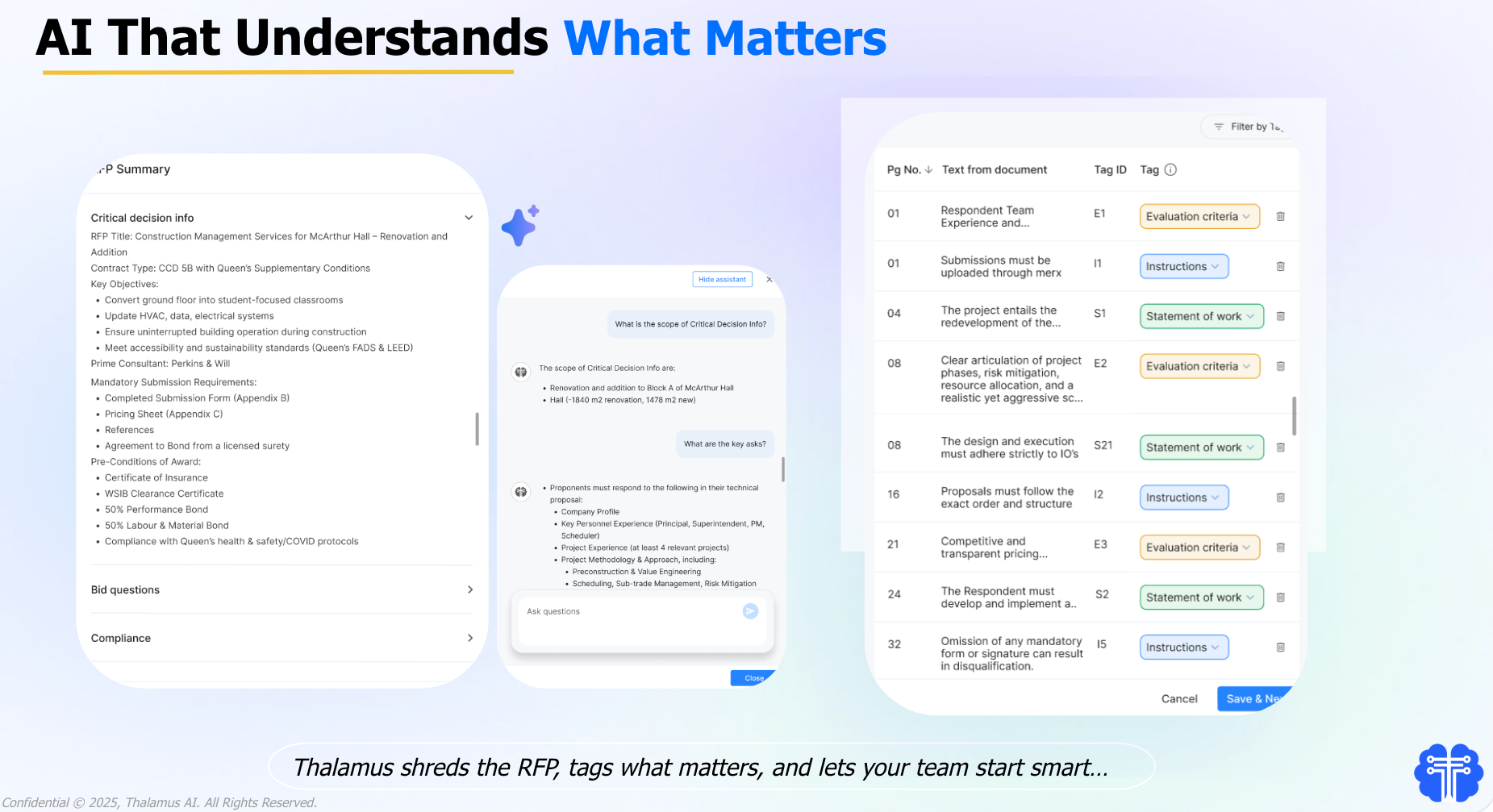
Modern AI-powered proposal tools increasingly incorporate AI agents and language models to assist with summarization, drafting, and content refinement. These capabilities help teams extract key information from large bid documents, prepare structured summaries for internal reviews, and support multi-language proposal work where organizations respond to RFx opportunities across regions and markets.
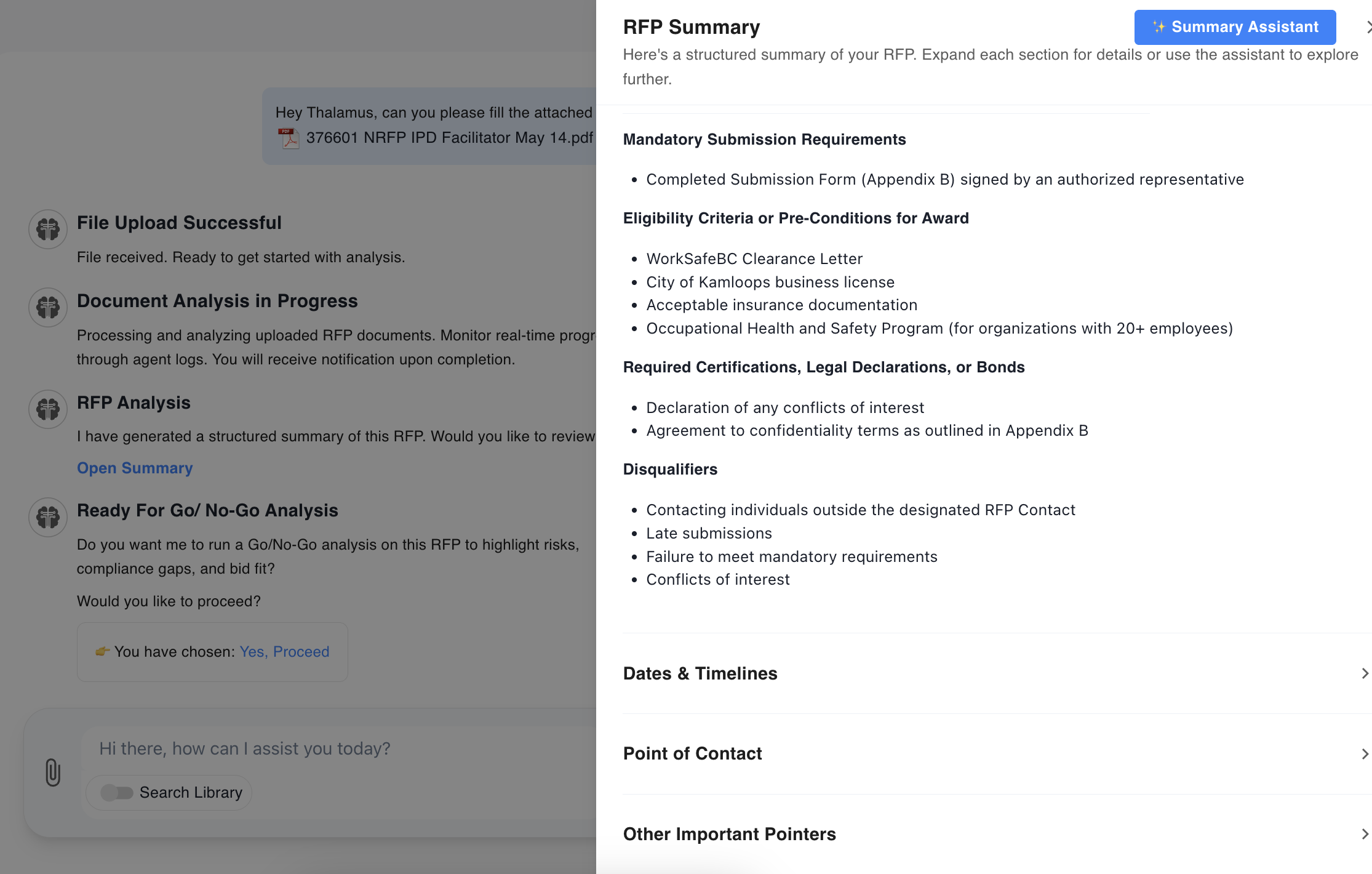
RFP Summary in Thalamus AI - instantly generate structured summaries, analyze key parameters, and explore deeper insights using AI assistants.
Some AI proposal and bid writing tools also include decision-support capabilities to help teams assess bid readiness before committing significant resources. For example, Go/No-Go assistants can analyze factors such as revenue potential, delivery timelines, and internal capacity against predefined bid criteria, enabling proposal and sales teams to make more informed, evidence-based decisions earlier in the process.
When combined with generative AI and agent-based assistance, these capabilities support more structured proposal planning and content development - without requiring teams to manage every aspect of the RFP lifecycle within a single system.
How to Evaluate AI Proposal and Bid Writing Software for Enterprise RFPs
Selecting AI proposal and bid writing software goes beyond basic content generation or document formatting. In 2026, teams increasingly evaluate these tools based on how well they support narrative drafting, content reuse, collaboration, and review workflows within enterprise RFx environments.
Rather than managing the full RFP lifecycle, proposal-focused platforms are typically assessed on their ability to assist proposal teams during content creation, coordination, and final submission, while complementing broader RFP or response management systems.
Below are the must-have features to look for:
1. Agentic AI for Context-Aware Proposal Drafting
Modern AI proposal and bid writing tools are moving beyond simple keyword matching or static templates toward context-aware drafting engines. Agentic AI approaches use multiple specialized assistants to help proposal teams adapt tone, structure, and messaging based on audience, compliance considerations, and proposal context.
These tools may incorporate pre-configured AI assistants that retain contextual memory, allowing them to align generated content with an organization’s writing style, brand voice, and internal guidelines during drafting and revision. This reduces repetitive manual edits while helping maintain consistency across narrative sections.
In more advanced implementations, agent-based systems can assist with tasks such as summarizing large bid documents, identifying key requirements, and suggesting relevant content from centralized libraries, supporting proposal authors without requiring full ownership of the broader RFP lifecycle.
2. Centralized Content Libraries for Proposal and Bid Writing Teams
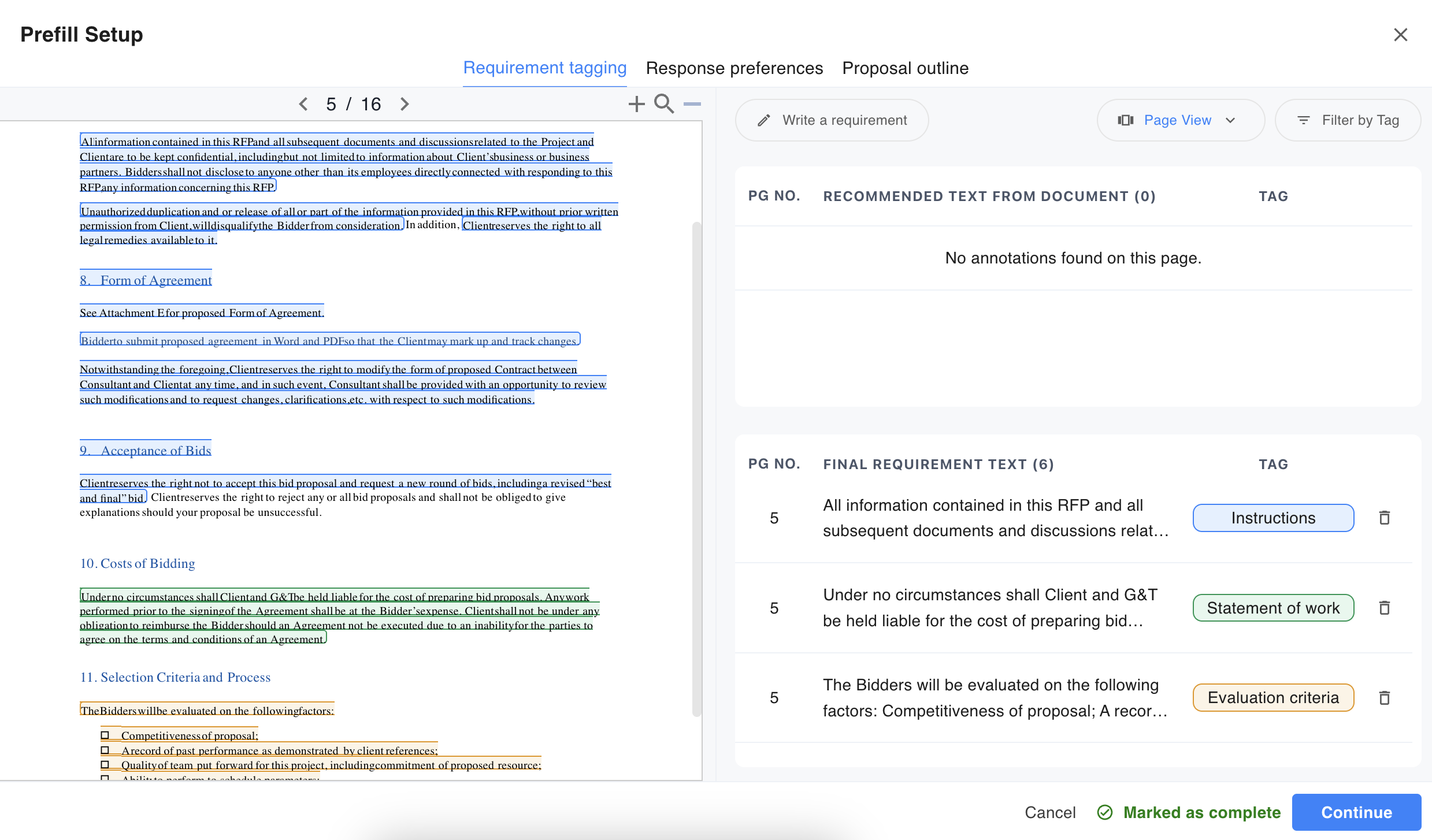
A centralized, AI-powered content library plays a critical role in supporting modern proposal and bid writing workflows. Rather than simply storing documents, advanced content libraries help proposal teams organize, retrieve, and reuse approved content efficiently during drafting and review.
In proposal-focused tools, these libraries often apply AI-driven tagging and search to narrative sections, Statements of Work, and supporting materials, reducing the time teams spend searching for the right language and minimizing reliance on manual copy-paste. When integrated with enterprise repositories, content libraries help keep proposal materials current and aligned across teams.
Common capabilities to evaluate include:
- AI-driven tagging and search to surface relevant proposal content quickly
- Repository integrations with systems such as SharePoint, Google Drive, and OneDrive to avoid outdated boilerplate
- Structured content blocks for case studies, templates, and testimonials that support consistent presentation
- Content hygiene and version awareness to flag duplicate or outdated responses during proposal development
By centralizing reusable content and applying intelligent organization, proposal and bid writing tools help teams reduce rework, improve consistency, and support collaborative drafting, while complementing broader RFP or response management platforms used elsewhere in the organization.
According to Loopio (2024), 56% of enterprises now maintain dedicated proposal teams, making cross-department collaboration critical for success.
3. Multi-Document, Clause-Traceable Compliance Matrix (Not a Rewritten Checklist)
A compliance matrix is a structured index that maps every mandatory and evaluative requirement in an RFP (or RFx package) to the specific proposal section, owner, and response location responsible for addressing it.
Its purpose is to ensure that no requirement is missed, misunderstood, or inconsistently addressed, while providing full traceability back to the original RFP clause, document, and version.
Most proposal tools generate a “compliance matrix” by paraphrasing requirements into a checklist. Thalamus AI treats the compliance matrix as a living index, not a restatement.
4. Document Management and Workflow Support for Proposal Teams
AI proposal and bid writing tools typically include document management and workflow features designed to support drafting, review, and approval stages of proposal development. These capabilities help teams reduce manual effort while maintaining consistency across complex proposal documents.
Common workflow features to evaluate include:
- Reusable proposal templates and automated formatting to minimize manual edits during drafting
- Structured review and approval workflows that support collaboration across proposal managers, SMEs, and leadership
- Compliance-aware checks that assist teams in aligning proposal content with internal standards and regulatory requirements
- Basic workflow visibility to track document status, revisions, and readiness for submission
By supporting document organization and collaborative workflows, proposal-focused tools help teams improve efficiency and quality during proposal creation—while complementing broader RFP or response management platforms used elsewhere in the organization.
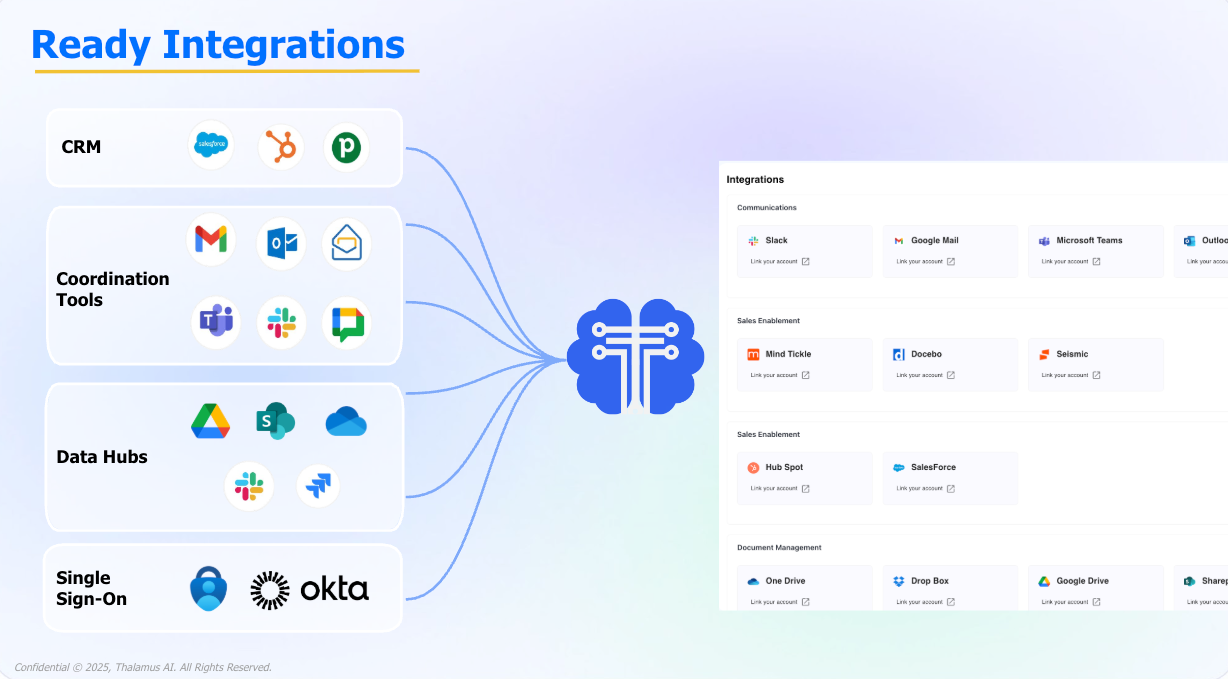
5. Integrations with Business and Sales Tools
When evaluating AI proposal and bid writing software, integrations play an important role in reducing context switching during drafting and review. Proposal teams benefit from tools that connect with existing sales and productivity systems to surface relevant deal information and supporting content without leaving their proposal workspace.
Common integrations to consider include:
- CRM integrations with platforms such as Salesforce or HubSpot to reference account details and opportunity context during proposal creation
- Productivity suite integrations with Microsoft 365 to support document collaboration and version control
- Task coordination features that help proposal and business development teams manage assignments and review steps
- Content synchronization with downstream systems to help maintain consistency between proposal documents and related business records
These integrations are typically designed to support proposal authoring and coordination, while broader deal management and contract workflows remain managed in dedicated enterprise systems.
6. Security and Compliance-Ready Architecture
Proposal and bid writing teams often work with sensitive client information, making security and compliance essential evaluation criteria when selecting AI-enabled proposal tools. Enterprises should look for platforms that align with widely accepted security frameworks and provide strong controls over proposal content access and usage. Common security capabilities to evaluate include:
- Alignment with standards such as SOC 2 Type II, ISO 27001, and GDPR
- Role-based access controls (RBAC) and audit trails to manage who can view, edit, and approve proposal content
- Multi-factor authentication (MFA) to protect user access
- Encrypted storage for proposal documents and supporting materials
These safeguards help ensure proposal content is handled responsibly while supporting collaboration across internal teams and external stakeholders.
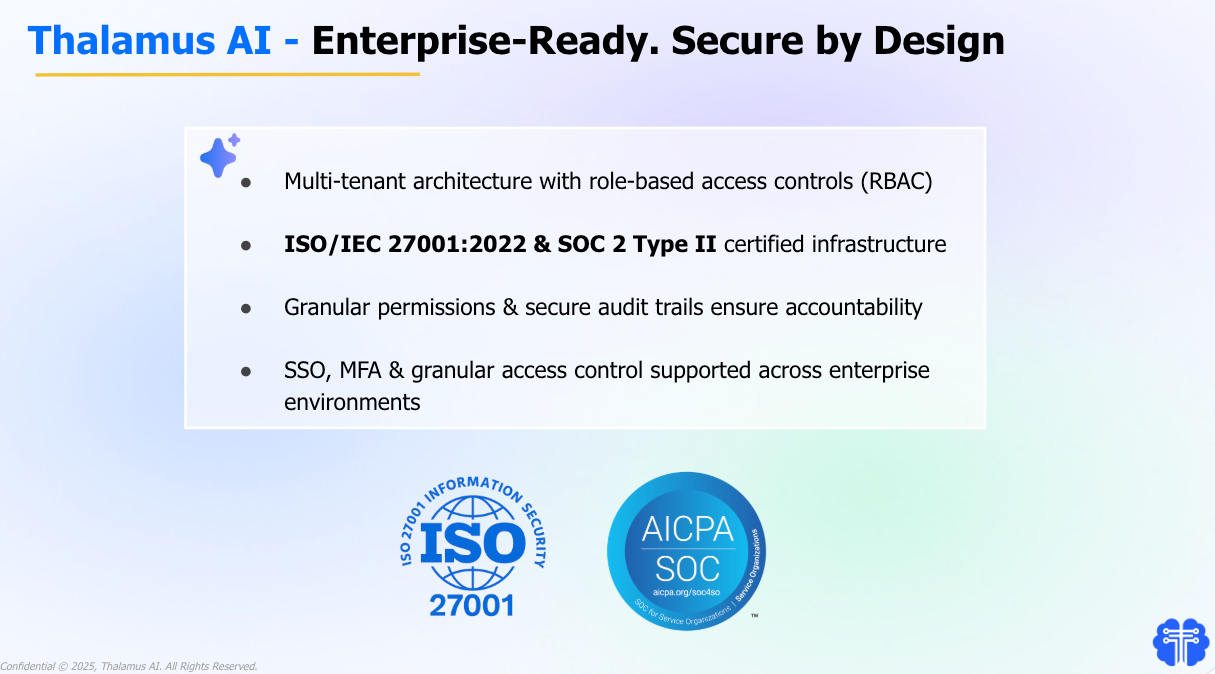
Security-first proposal management ensures your platform isn’t just smart - it’s trustworthy.
AI Proposal Software & Bid Writing Tools: 2026 Comparison
Selecting AI proposal and bid writing tools often comes down to how well they support narrative drafting, collaboration, and workflow coordination for complex enterprise proposals. Rather than evaluating full RFP platforms, this comparison focuses on tools that assist proposal teams during content creation, review, and submission.
Below is a side-by-side comparison of leading AI proposal software and bid writing tools in 2026, based on factors such as automation support, scalability for enterprise teams, and alignment with proposal-focused workflows.
1. Thalamus AI - Best for Enterprise-Scale Proposal & Bid Writing
Best for: Large enterprise teams managing complex, compliance-heavy proposal and bid writing workflows across industries such as infrastructure, AEC, consulting, technology, and healthcare.
Thalamus AI is an agentic AI platform designed to support enterprise proposal and bid writing teams within broader RFx response environments.
Powered by 20+ smart AI agents, Thalamus analyzes complex Requests for Proposal (RFPs), tags requirements, auto-create compliance matrices and generates winnable first drafts in minutes. By leveraging boilerplate content, past proposals, project data, and case studies, it delivers accurate, client-tailored responses that reflect your organization’s unique voice and expertise.
Thalamus integrates seamlessly with SharePoint, OneDrive, Google Drive, Slack, Outlook, and Microsoft Teams. It centralizes enterprise knowledge into a centralized content library, enabling smooth collaboration across teams and subject matter experts.
Built with SOC 2, ISO 27001, and GDPR compliance, Thalamus provides secure, scalable RFP response management workflows.
Key Highlights:
- 20+ Specialized AI Agents: From RFP Summary Agents to Auto-Fill & Library Agents, every task is handled by a purpose-built assistant.
- Auto Creation of Compliance Matrix: Thalamus AI treats the compliance matrix as a living index, not a restatement. Every row is clause-traceable back to the exact source document, section, and version across multi-document RFPs, including addenda and clarifications. When requirements change, Thalamus automatically flags impacted proposal sections, owners, and drafts - ensuring teams stay truly compliant, not just compliant on paper.
- Auto-Generated Proposal Outlines: Creates structured, ready-to-edit drafts in minutes.
- Multi-language RFP automation: AI agents identify and reuse winning content from past proposals in any language, translating it intelligently for new submissions.
- Memory-Rich Contextual Generation: AI that remembers tone, structure, and compliance rules across versions.
- Centralized Smart Library: Integrated with SharePoint, Google Drive, and OneDrive for content reuse and accuracy.
- Easy and Intuitive UX: Designed for proposal teams, not just tech experts. Thalamus AI’s clean, intuitive interface makes it simple for non-technical users to navigate. Rated 5/5 for usability on G2, it’s consistently praised for reducing onboarding time and boosting adoption across enterprise teams.
- Enterprise-Grade Security: Built with SOC 2, ISO 27001, and GDPR compliance, ensuring data protection and regulatory readiness.
Best suited for: Fortune 500 and mid-sized enterprises, government contractors, AEC firms, healthcare providers, and regulated industries that require scalable proposal and bid writing support, strong collaboration, and consistent quality across complex submissions.
2. AutoGen AI - AI Proposal Writing Software
Best for: Teams looking for an AI-powered proposal writing tool focused on drafting narrative-heavy bids, tenders, and long-form proposal documents.
What it does well:
- Strong generative drafting capabilities: AutoGen AI emphasizes Generative AI to assist with writing, rewriting, and refining proposal and tender content. It performs well in narrative-heavy sections where language quality and structure matter most.
- Broad system compatibility: Supports integrations with systems such as Salesforce and offers multi-document ingestion to help teams analyze large bid packages.
- Responsive customer support: Users frequently highlight helpful onboarding support and effective research and rephrasing assistance during proposal drafting.
Where it may fall short for some teams:
- Higher cost and unclear ROI for smaller teams: AutoGen’s enterprise-style pricing and onboarding model may be difficult to justify for small or mid-sized proposal teams with limited budgets.
- Steeper learning curve: Reviews note a complex interface that often requires training before teams can use the platform efficiently, potentially slowing adoption.
- Limited workflow coordination: While strong in content generation, AutoGen offers fewer capabilities for structured collaboration, task routing, version control, and proposal workflow coordination compared to platforms designed specifically for enterprise proposal operations. Some users also note gaps in content library management and multi-user orchestration.
Summary:
AutoGen AI is a capable proposal writing tool for teams focused on producing high-quality narrative content for bids and tenders. It is well suited for proposal authors who prioritize drafting assistance and language refinement. However, organizations that require structured collaboration, scalable workflow coordination, and deeper proposal management support may encounter limitations as proposal volume and team size grow.
3. Proposify – Best for Simple Proposals, Not Complex RFPs
Best for: Small to mid-sized sales teams, marketing departments, and service firms that create frequent, lightweight proposals, quotes, and contracts.
Not ideal for: Organizations responding to large, compliance-heavy RFPs or managing complex, multi-department proposal workflows.
What it does well:
- User-friendly proposal design: Proposify offers a strong set of polished templates and branding tools. G2 reviewers frequently describe the platform as intuitive, sleek, and professional.
- Built-in commercial workflows: Robust e-signature, pricing tables, and approval functionality are integrated into a single workflow, making it well suited for sales proposals and contract execution.
- Fast proposal creation: Drag-and-drop sections, live pricing modules, proposal tracking, and basic analytics support rapid turnaround for standard proposals.
Limitations for complex proposal environments:
- Limited AI-driven automation: Proposify is not designed for advanced requirement analysis, large-scale content reuse, or agent-based assistance typically needed for complex RFP or questionnaire-driven responses.
- Scalability constraints: Reviews note that editing and managing large, multi-section proposals can become cumbersome as document size and complexity increase.
- Proposal-first focus: The platform excels at short-form proposals and quotes but offers fewer capabilities for long-form, compliance-heavy submissions involving multiple SMEs and review cycles.
- Enterprise governance gaps: While CRM integrations and e-signatures are supported, Proposify provides limited controls for large enterprise content libraries, advanced version management, or compliance-driven workflows.
Summary:
Proposify is a strong choice for teams that regularly produce polished sales proposals, quotes, and service agreements with straightforward workflows. For organizations managing large RFPs, security questionnaires, or multi-stakeholder proposal efforts, its feature set may be less suitable as proposal complexity and collaboration requirements increase.AI Proposal Software Comparison - Thalamus AI vs Autogen AI vs Proposify
Thalamus AI differentiates itself through agent-based proposal workflows, a centralized and secure content library, and built-in collaboration features designed to support large, multi-stakeholder proposal teams.
Summary: Choosing the Right AI Proposal and Bid Writing Tool in 2026
When comparing Thalamus AI, AutoGen AI, and Proposify, the differences largely come down to proposal complexity, team size, and collaboration needs.
Thalamus AI is well suited for enterprise teams managing large, multi-stakeholder proposals that require structured drafting support, content reuse, collaboration, and consistency across regions. Its agent-based approach, centralized content libraries, and integrations with enterprise tools make it a strong option for organizations handling complex proposal and bid writing workflows within broader RFx environments.
AutoGen AI focuses primarily on narrative drafting and language generation, making it a practical choice for teams that prioritize writing assistance for bids and tenders without requiring extensive governance, compliance and workflow coordination or collaboration features.
Proposify is best aligned with sales-driven proposals, quotes, and contracts, offering ease of use and polished templates for small to mid-sized teams. It is less suited for long-form, compliance-heavy proposals or multi-department review processes.
Bottom line:
There is no single “best” tool for every organization. Teams producing lightweight proposals or quotes may favor simplicity and speed, while enterprises responding to complex bids often benefit from tools designed to support collaboration, content governance, and structured proposal development at scale. Selecting the right AI proposal software depends on how closely a tool aligns with your proposal volume, document complexity, and collaboration requirements.
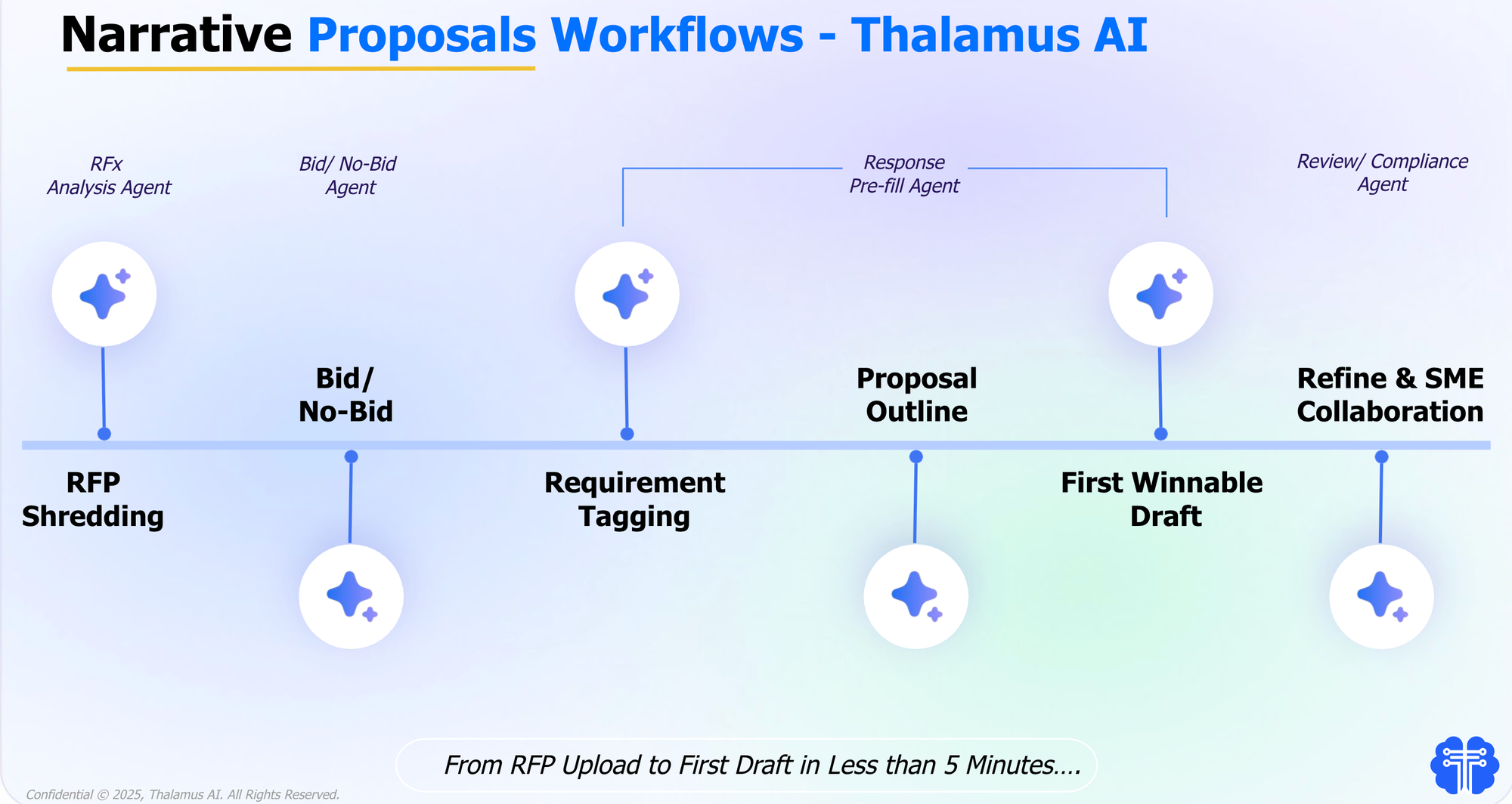
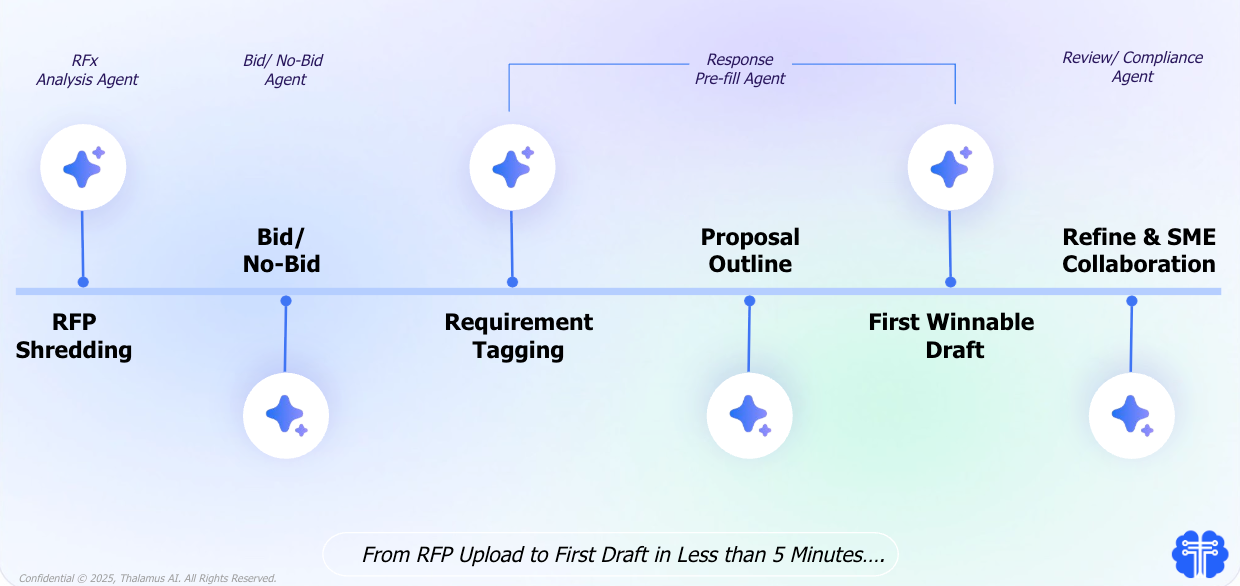
End to End Proposal Management Workflow - Thalamus AI, RFP Upload to First Winnable Proposal Draft in minutes.
How Thalamus AI Supports End-to-End Proposal Execution
- RFP Intake & Requirement Shredding
Thalamus ingests and analyzes multi-document RFx packages - RFPs, addenda, DDQs, and security questionnaires, automatically identifying instructions, evaluation criteria, and mandatory requirements. - Clause-Traceable Compliance Matrix Generation
Thalamus automatically generates a clause-level compliance matrix across all RFx documents. Each requirement is indexed, not rewritten, and mapped back to its exact source document, section, and version. When addenda or clarifications are released, impacted requirements, proposal sections, and owners are automatically flagged to prevent silent compliance drift. - Bid/ No-Bid Intelligence
Specialized AI agents analyze historical performance, delivery risk, and opportunity fit to support faster, evidence-based go/no-go decisions before significant resources are committed. - Contextual Auto-Fill
Using approved, branded content from your enterprise library, Thalamus pre-fills proposal sections with accurate responses adapted to section context, tone, and language, supporting 14+ languages for global teams. - Section-Level Collaboration & SME Routing
Proposal managers assign sections or subsections to SMEs with built-in progress tracking, version awareness, and Slack, Teams, or email notifications -eliminating follow-up chaos and duplicate drafts. - Compliance Review & Validation
AI agents act as compliance enforcers, validating that every proposal section addresses its linked compliance requirements. The system flags gaps, inconsistencies, and formatting violations without rewriting mandatory content or altering win themes. - Final Assembly & Submission
Proposals are assembled and exported in portal-ready formats (Word, PDF) with full version history preserved, ensuring submission accuracy without formatting or traceability issues.Throughout the process, humans stay in control. Thalamus acts as your behind-the-scenes proposal assistant - empowering your team to focus on strategy, not formatting or follow-ups.
Want to see how this works on a real RFP? Check out the Thalamus AI platform diagram showcasing Agentic AI Magic on top of Platform Capabilities.
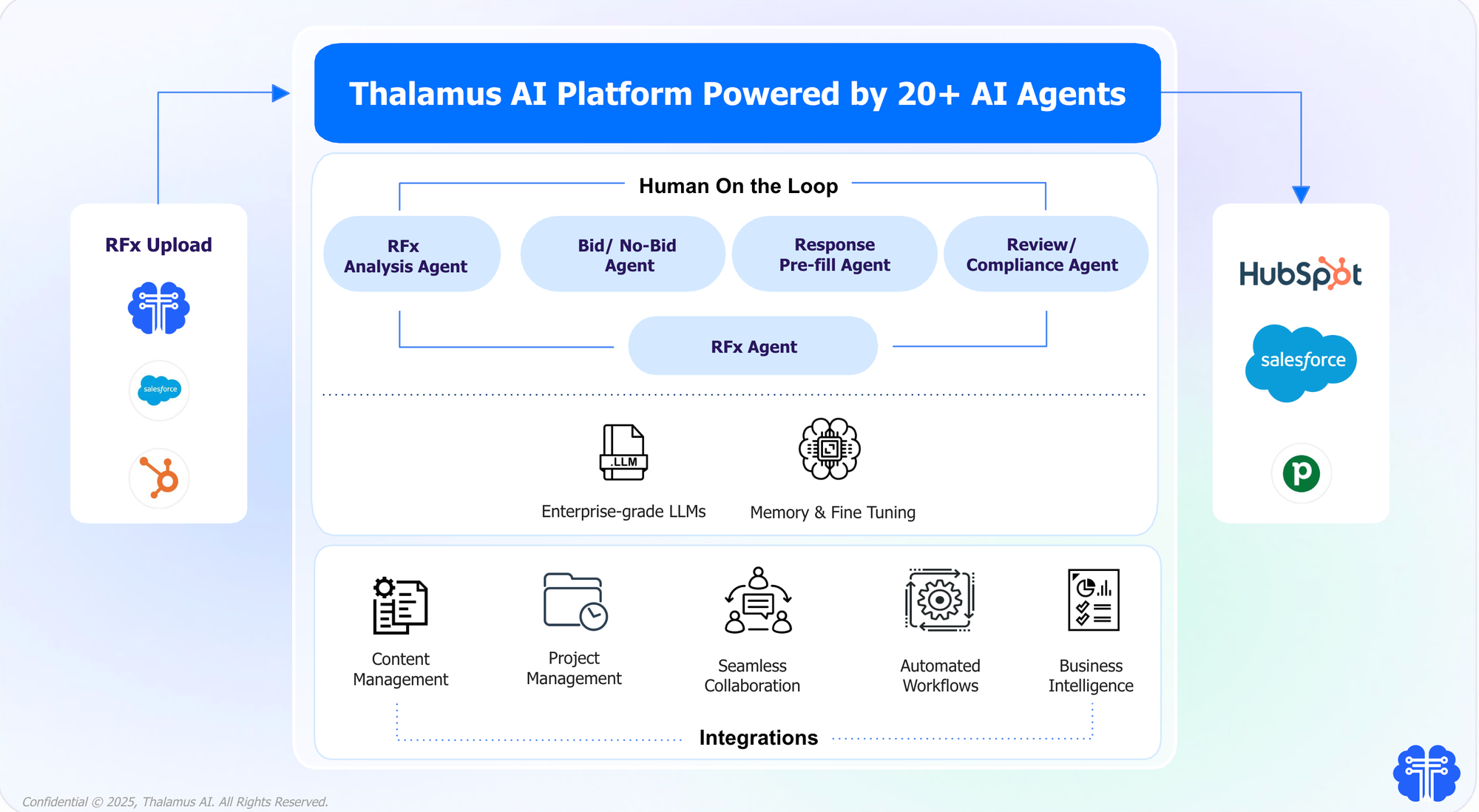
Platform Diagram of Thalamus AI - Platform Capabilities powered by Agentic AI..
Let us know - we’ll walk you through a live example? Schedule a quick discovery call with Thalamus AI today.
Thalamus AI combines Agentic AI with automation software, teamwork workflows, and shared knowledge bases. This helps companies respond faster, reduce proposal fatigue, and win more important deals.
Conclusion: Choosing the Right AI Proposal and Bid Writing Software
Choosing the right AI proposal and bid writing software has a direct impact on how efficiently teams work, how consistently requirements are met, and how confidently organizations pursue new opportunities. While traditional tools may handle basic document creation, modern proposal environments increasingly require automation, collaboration, and content governance to support complex bids at scale.
AI-powered proposal tools are evolving to help teams reduce manual effort, improve content reuse, and coordinate work across stakeholders, without replacing human judgment or strategic decision-making. As proposal volumes grow and requirements become more complex, organizations often evaluate tools based on how well they support structured drafting, compliance alignment, and collaboration within broader RFx workflows.
Thalamus AI is designed for teams that manage complex, compliance-driven proposals and bids, offering agent-based assistance, centralized content management, and enterprise integrations to support proposal execution from intake through submission. Rather than replacing existing RFP systems, it complements them by helping proposal teams work faster, with greater consistency and control.
According to Deloitte, AI-based workflow automation can cut operational costs by 20–30% and slash manual errors by up to 50%, underscoring the ROI of investing in modern RFP systems.
Ready to elevate your RFP game? Visit Thalamus AI to learn more. Or Schedule a discovery call.
- Not sure which AI prompts actually win proposals? Read our guide: 7 RFP ChatGPT Prompts That Win More Bids (Faster).
- Learn more about AI Agents in RFP Automation: AI Agents for RFP Automation: What They Are & Why Enterprises Are Finally Paying Attention
- Looking for detailed comparison of top 3 RFP Tools, Read it here.
- Want to know what’s next in proposal management? Read the 12 RFP Trends Shaping Proposal Management in 2026.